
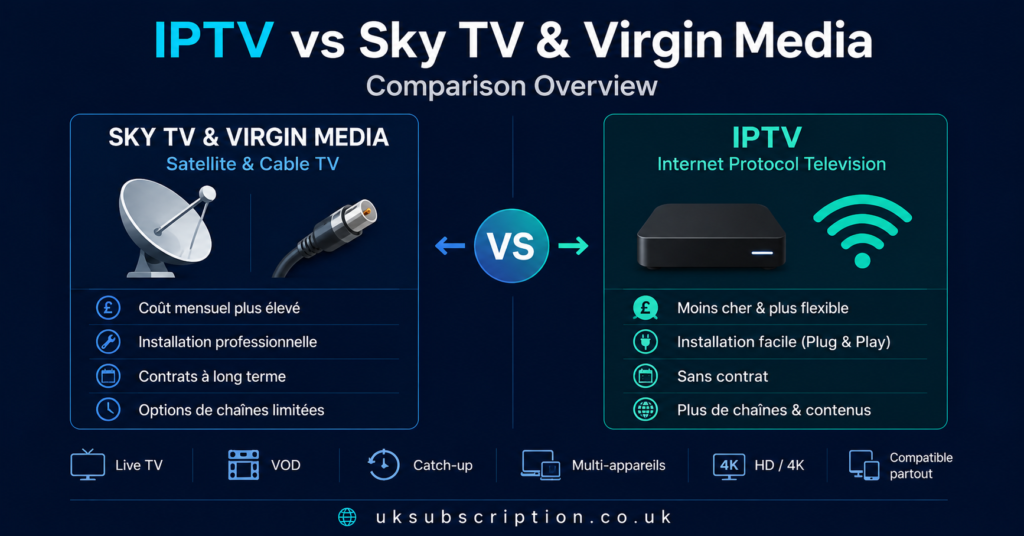
IPTV vs Sky TV & Virgin Media comes down to three practical differences: how you pay, what you’re tied into, and how much control you have over your setup. Sky and Virgin Media are broadcast and cable operators with fixed packages, engineer-installed hardware, and contract terms. IPTV is a delivery method, streamed over your existing internet connection, usually with shorter commitments and more flexibility over devices. Neither is automatically better. The right choice depends on your broadband quality, how many services you’re currently paying for separately, and how much you value a fixed, supported package versus a flexible one you manage yourself.
What “IPTV vs Sky TV & Virgin Media” Actually Means
Sky TV and Virgin Media deliver television through satellite dishes and coaxial or fibre cable networks they own and maintain. You sign up, an engineer visits (in most cases), and a box arrives that’s tied to their infrastructure. IPTV is different in kind, not just in branding. It sends television as data over the internet connection you already have, using an app on a Firestick, Android box, Smart TV or similar device rather than a dedicated satellite or cable box.
This matters when you’re comparing the three, because you’re not really comparing three television services. You’re comparing a broadcast model, a cable model, and an internet-delivery model. Each has different failure points, different costs, and different levels of control.
Pro tip: Before comparing prices, check your actual broadband speed and whether your provider applies any data caps. IPTV depends entirely on a stable connection, so a slow or inconsistent line changes the comparison more than any package price does.
Cost Structure: Contracts vs Rolling Access
Sky and Virgin Media packages are typically sold as bundles, television alongside broadband and sometimes a phone line, on fixed-term contracts that often run 12 to 18 months. Early exit usually carries a cancellation charge. Pricing tends to rise after an initial discounted period, a pattern Ofcom has flagged repeatedly in its work on mid-contract price increases across pay-TV and broadband.
IPTV subscriptions are commonly sold in shorter blocks, a month, three months, six months or a year, without the same bundling. There’s rarely an engineer visit or hardware rental fee, since the service runs on a device you likely already own. That said, IPTV pricing varies enormously between providers, and a low headline price sometimes reflects a smaller channel list or fewer support resources rather than genuine value.
| Factor | Sky TV / Virgin Media | IPTV |
|---|---|---|
| Typical commitment | 12 to 18 month contract | Monthly to annual, no fixed contract |
| Setup | Engineer install, dedicated box | Self-setup on existing device |
| Price changes | Can rise mid-contract | Set per renewal period |
Pro tip: If you’re currently on a Sky or Virgin Media contract, check your renewal date before switching anything. Cancelling mid-contract usually costs more than waiting a few weeks for the term to end.
Content Access and What You’re Actually Buying
Sky and Virgin Media hold direct licensing agreements with broadcasters and content owners, which is why their packages include specific channel tiers, on-demand libraries tied to those agreements, and features like built-in catch-up and recording. What you see in their app or box is what they’ve licensed and paid for directly.
IPTV works differently. It’s a transmission method, not a content owner. What you get through an IPTV subscription depends entirely on who is providing it and what rights, if any, sit behind that content. This is the part of the comparison that gets skipped in a lot of guides, and it shouldn’t be. Legality in IPTV depends on whether the provider has genuine distribution rights for what they’re streaming, not on whether they have a professional-looking website, a working payment page, or apps that install cleanly. None of those things confirm licensing status.
This is a genuine gap worth asking about directly before you commit to any IPTV subscription UK provider, and it applies just as much to well-known names as to smaller ones.
Questions Worth Asking Before Choosing Either Route
| Question to ask | Why it matters |
|---|---|
| What is the actual contract length? | Sky and Virgin Media often lock you in beyond the promotional period |
| What content rights does the provider hold? | Applies to IPTV providers specifically; a working website is not proof of licensing |
| What happens if my broadband drops? | IPTV needs a stable connection; cable and satellite are less dependent on it |
| Is there a genuine refund or cooling-off period? | Terms vary widely between traditional and IPTV providers alike |
Pro tip: Ask any provider, traditional or IPTV, for their terms in writing before paying. A provider that avoids a direct answer about contract length or content rights is telling you something, even if they don’t say it outright.
Device Flexibility and Hardware
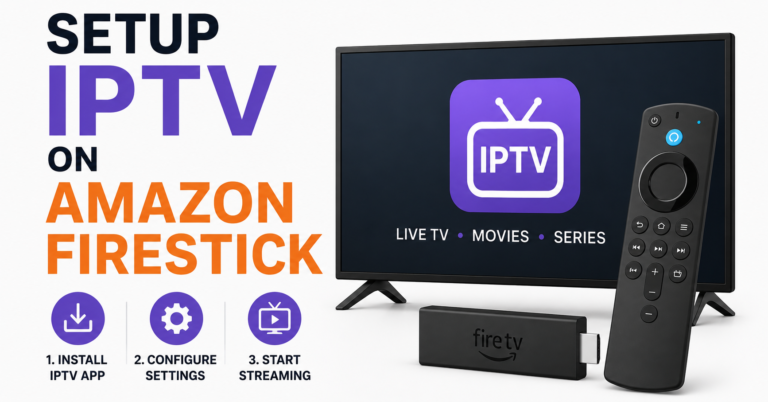
Sky and Virgin Media hardware is built for their own networks and generally can’t be repurposed for anything else. If you cancel, the box typically goes back or becomes inactive. IPTV runs on devices you likely already own, a Firestick, an Android TV box, a Smart TV app, or a set-top box designed for streaming apps generally rather than one network specifically.
This flexibility cuts both ways. It means lower hardware cost and more choice over how you watch, but it also means you’re responsible for your own setup, app selection, and troubleshooting rather than relying on an engineer or a single supported box.
An illustrative example: a provider such as Skip This might present itself as an alternative to traditional pay-TV, but the same evaluation applies regardless of provider size or how polished the marketing looks. Contract terms, support quality, and content rights should be checked individually, not assumed from branding.
Reseller and Business Perspective on IPTV Packages
For anyone running or considering an IPTV panel reseller business rather than buying as a subscriber, the comparison against Sky and Virgin Media looks different again. Resellers aren’t competing on identical terms, they’re offering a different delivery model with its own operational demands.
Panel credits, dashboard access, and sub-reseller hierarchies mean a reseller’s margin depends on customer retention and support quality rather than a fixed licensing fee. Where Sky and Virgin Media absorb infrastructure and support costs centrally, an IPTV reseller UK business carries more of that responsibility directly, including explaining setup issues, managing renewals, and being transparent with customers about what the service actually includes.
| Setup | Business consideration |
|---|---|
| Traditional pay-TV | Centralised support, fixed pricing, licensing handled by the broadcaster |
| Reseller-run IPTV | Support and transparency managed by the reseller, credit-based cost structure |
Pro tip: If you’re evaluating a reseller dashboard, ask specifically how customer support is escalated when something goes wrong. A panel with no clear escalation path usually means you’re on your own when a customer has a problem.
Reliability: What Actually Breaks
Satellite services like Sky are vulnerable to weather interference and dish alignment issues. Virgin Media’s cable network is generally stable but tied to physical infrastructure that can’t always reach every property. IPTV’s main point of failure is your internet connection itself, congestion, poor Wi-Fi, or an overloaded router will affect picture quality faster than it affects a satellite or cable feed.
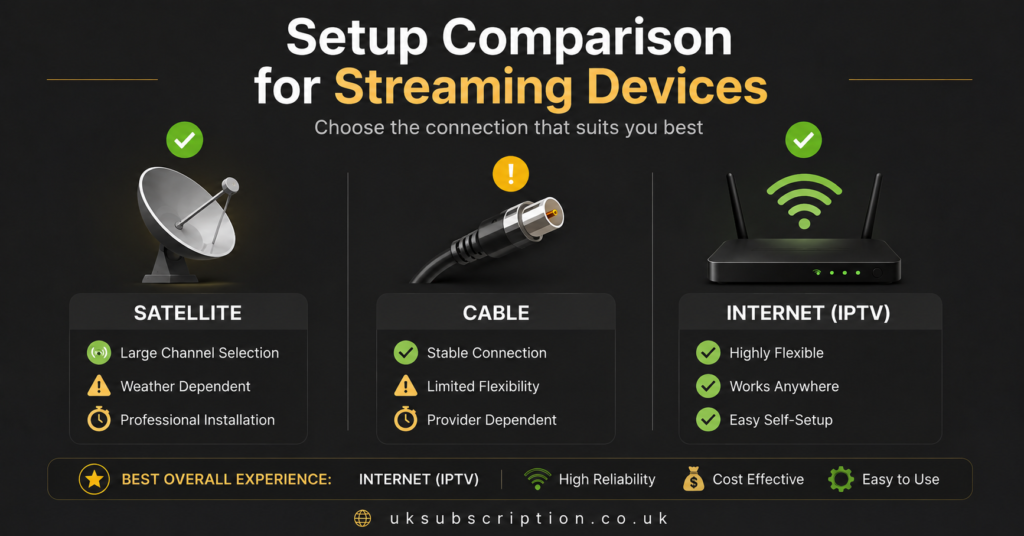
None of this means one option is inherently more reliable. It means the causes of a poor picture differ, and knowing which one applies to your situation makes troubleshooting faster whichever route you choose.
For readers dealing with picture or connection issues on the IPTV side specifically, our guide on fixing IPTV buffering and freezing walks through the most common causes step by step.
Support and Account Management
Sky and Virgin Media run large, structured support operations, phone lines, retail stores, and app-based account management. Response times vary but the structure is consistent and well documented. IPTV support varies far more by provider, some run responsive WhatsApp or live chat support, others are slower or harder to reach once you’ve paid.
Before committing to any IPTV subscription, it’s worth testing the provider’s support responsiveness during a trial period if one is offered, rather than assuming it will match what you’re used to from Sky or Virgin Media.
Making the Decision
There isn’t a single correct answer to IPTV vs Sky TV & Virgin Media, because the two models solve different problems. If you want a fixed package with direct licensing, established support, and don’t mind a contract, traditional pay-TV remains a straightforward option. If you want flexibility over devices, shorter commitments, and are comfortable managing your own setup, IPTV can offer that, provided you choose a provider carefully and understand what content rights actually sit behind their service.
If your interest is broader UK market context rather than a straight comparison, our overview of IPTV in the United Kingdom for 2026 covers how the wider landscape has developed for both viewers and resellers.
Frequently Asked Questions
Is IPTV cheaper than Sky TV or Virgin Media?
Often, yes, particularly because IPTV typically avoids long fixed contracts and hardware rental fees. However, pricing varies significantly by provider, so it’s worth comparing actual terms rather than headline prices alone.
Do I need special equipment for IPTV?
No dedicated box is required in most cases. IPTV runs through apps on devices such as a Firestick, Android TV box, or compatible Smart TV, using your existing internet connection.
Is IPTV legal?
IPTV itself is a legitimate streaming technology. Legality depends on whether the specific provider holds genuine rights to distribute the content they offer, not on how the service is presented or how it’s paid for.
Will my broadband cope with IPTV?
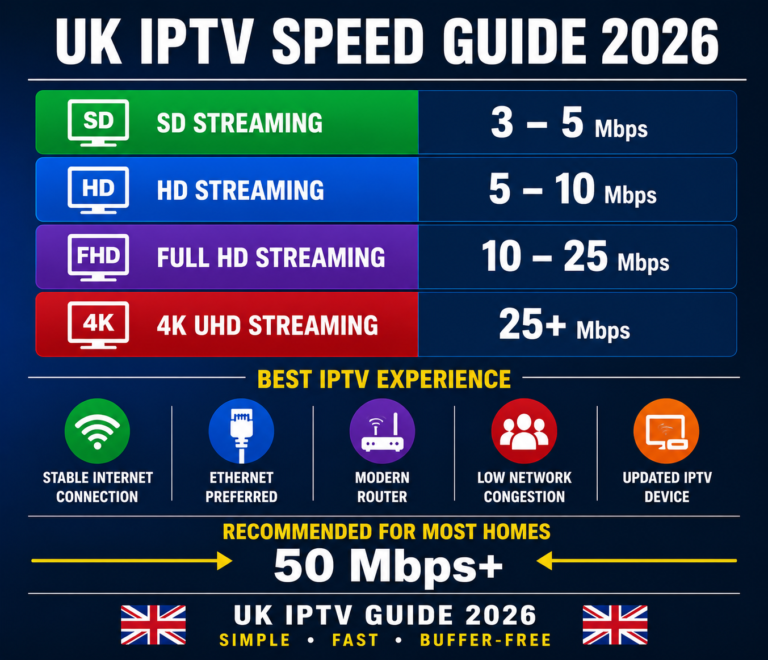
A stable connection with reasonable speed is needed for smooth streaming, particularly for HD or 4K content. If your connection is already unreliable, that will affect IPTV more noticeably than it affects satellite or cable.
Can I switch between Sky, Virgin Media and IPTV easily?
You can, but check your existing contract terms first. Leaving a Sky or Virgin Media contract early usually carries a cancellation cost, so timing the switch around your renewal date is usually the more cost-effective approach.
What should I ask an IPTV provider before subscribing?
Ask about contract length, refund terms, what devices are supported, and what content rights back their service. A provider unwilling to answer clearly is worth treating with caution, regardless of how professional their website looks.
Conclusion
Weighing up IPTV vs Sky TV & Virgin Media really comes down to what you value more, a fixed, centrally supported package with direct licensing, or a flexible, internet-delivered setup you manage yourself. Traditional pay-TV suits households that want a set-and-forget contract with established support. IPTV suits those wanting shorter commitments and device flexibility, provided the provider’s content rights and support quality are checked properly rather than assumed. Whichever direction you lean, the sensible next step is the same: read the actual contract terms, test support responsiveness where possible, and confirm what you’re really paying for before you commit.
Decision Checklist
- Check your current Sky or Virgin Media contract end date before switching anything
- Compare actual contract length, not just the advertised monthly price
- Ask any IPTV provider directly about their content rights and licensing basis
- Test your broadband speed and stability before relying on IPTV for daily viewing
- Confirm refund or cancellation terms in writing for either route
- Trial an IPTV Reseller Panel provider’s support responsiveness before committing to a longer term
- Check device compatibility for the specific hardware you already own